What is FAC (Fuel Adjustment Charge) in Your Electricity Bill?

Have you ever noticed that even if you consume exactly 300 units of electricity in April, and exactly 300 units again in May, your final bill amount is slightly different? You might find a mysterious line item called FAC, PPAC, or FPPCA changing every month.
This charge is often a source of confusion and anger for consumers. Let's demystify exactly what this charge is and why your power company is legally allowed to change it without warning.
Quick Answer
FAC (Fuel Adjustment Charge) is a variable surcharge added to your bill to cover the fluctuating cost of coal and gas used to generate electricity. When coal prices go up globally, your FAC goes up. When fuel is cheap, your FAC goes down (or becomes a rebate).
Different Names, Same Concept
Depending on which Indian state you live in, the electricity distribution company (DISCOM) might use a different acronym for this exact same charge:
- FAC: Fuel Adjustment Charge (Common in Maharashtra - MSEDCL)
- PPAC: Power Purchase Adjustment Cost (Common in Delhi - BSES)
- FPPCA: Fuel and Power Purchase Cost Adjustment (Common in UP and Gujarat)
- FSA: Fuel Surcharge Adjustment (Common in Southern States)
Why does the Power Company need FAC?
Electricity tariffs (the base rate you pay per unit) are fixed by the State Electricity Regulatory Commission (SERC) once a year. For example, they might decide in January that 1 unit will cost ₹6.00 for the entire year.
However, over 70% of India's electricity is generated by burning coal. The price of coal, diesel, and natural gas changes every single day on the global market. Furthermore, during peak summer, your DISCOM might have to urgently buy expensive power from private grids to prevent blackouts.
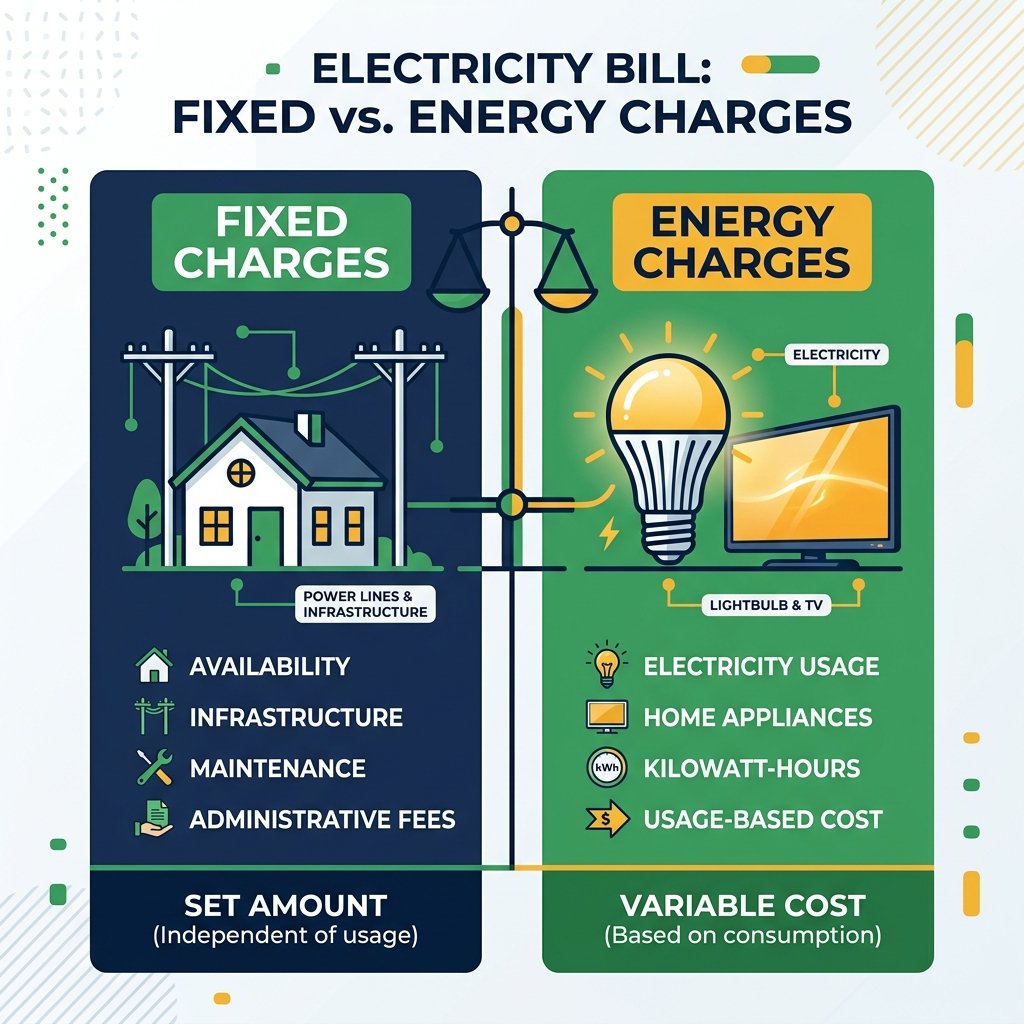
If the DISCOM is forced to buy expensive coal in May, but they are only allowed to charge you the fixed ₹6.00 rate set in January, they would go bankrupt within weeks. Therefore, the government allows them to recover this exact difference via the FAC.
How is FAC Calculated on Your Bill?
FAC is usually calculated in one of two ways, depending on your state's regulations:
- As a Flat Rate (Paise per Unit): The DISCOM calculates that fuel was slightly more expensive this month, so they add an FAC of ₹0.45 per unit. If you consumed 200 units, your FAC is ₹90.
- As a Percentage: This is common in cities like Delhi. The PPAC might be declared as 15%. If your base energy charge is ₹1000, you will pay an extra ₹150 as PPAC.

Can FAC be Negative?
Yes! This is a fact that many consumers don't realize. The FAC mechanism works both ways. If the monsoon is heavy and hydroelectric plants generate massive amounts of cheap electricity, the DISCOM's power purchase costs drop below the projected budget.
By law, they must pass these savings back to the consumer. You will occasionally see a negative FAC value on your bill (e.g., -₹0.15 per unit), which acts as a discount, lowering your final payable amount.
Frequently Asked Questions
What is the full form of FAC in an electricity bill?
FAC stands for Fuel Adjustment Charge. In some states, it is also called FPPCA (Fuel and Power Purchase Cost Adjustment) or PPAC (Power Purchase Adjustment Cost).
Why does the FAC amount change every month?
Because the global price of coal and natural gas used by power plants changes daily. DISCOMs use the FAC to pass these fluctuating fuel costs directly to consumers.
Can FAC be a negative amount?
Yes. If the power company purchased fuel or electricity from the grid at a rate cheaper than what was originally projected by the tariff order, they will pass the savings to you as a negative FAC (a rebate).
Is FAC a tax?
No. FAC is not a government tax like Electricity Duty. It is a direct reflection of raw material (fuel) costs.
Do solar panel owners have to pay FAC?
Usually yes, but only on the 'net' units they import from the grid. If your solar panels produce more than you consume, you generally do not pay FAC for that billing cycle.
Calculate Your Bill Including Surcharges
Our dedicated Electricity Bill Calculator automatically accounts for state-specific surcharges, fixed charges, and duties to give you an accurate estimate of your final bill.
Use the Electricity Bill Calculator