3-Star vs 5-Star AC Electricity Consumption in India
When buying an AC in India, the choice between 3-star and 5-star models is one of the most common questions. The 3-star model usually looks more affordable in the showroom. The 5-star model usually promises lower electricity bills. The right choice depends on your usage, local electricity rate, room size, and how long you plan to keep the AC.
A star rating is not just a marketing sticker. It is meant to help buyers compare energy efficiency. But many buyers still make mistakes. Some compare only the star count and ignore the annual energy consumption. Some compare a 1 ton model with a 1.5 ton model. Some buy a 5-star AC for a guest room where it runs for only a few days each year. Others buy a 3-star AC for a bedroom that runs all night for five months, then regret the high bill.
This guide explains what the BEE label means, how 3-star and 5-star ACs differ in electricity consumption, how to calculate payback, and when each option makes sense for Indian homes.
Quick Answer
A 1.5 ton 5-star inverter AC can use roughly 20 percent to 30 percent less electricity than a comparable 3-star inverter AC. If you use the AC daily for long hours, the 5-star model can recover its higher purchase price through bill savings. If the AC is for occasional use, a 3-star model can be financially reasonable.
What The BEE Star Label Means
BEE stands for Bureau of Energy Efficiency. It runs India's star labelling programme for many appliances. The official programme describes star rating as a 1 to 5 scale in ascending order of efficiency. In simple words, more stars mean better energy efficiency within that product category.
For AC buyers, the star label is useful because it gives more than just a star count. It can show annual energy consumption, ISEER value, cooling capacity, brand, model, and label period. The annual consumption number is especially important because it is printed in units, which directly relates to your electricity bill.
You can read the official programme overview on the Bureau of Energy Efficiency star labelling page.
Do Not Compare Stars Without Comparing Capacity
A 1 ton 5-star AC and a 1.5 ton 3-star AC are not the same size. A 2 ton AC and a 1.5 ton AC are not comparable just because both have stars. First compare the same capacity category, then compare the label numbers.
For example, if your room needs a 1.5 ton AC, compare 1.5 ton models from different brands. If you compare a smaller 1 ton model with a 1.5 ton model, the smaller model may show lower annual consumption because it has lower cooling capacity. That does not mean it will cool your room properly.
3-Star vs 5-Star AC Annual Unit Comparison
The exact number changes by brand, model, technology, and label period. Still, a practical comparison helps you estimate the bill difference.
| AC Type | Typical Annual Units On Label | Annual Cost at Rs 8/unit | Best For |
|---|---|---|---|
| 1.5 ton 3-star inverter AC | 950 to 1150 units | Rs 7,600 to Rs 9,200 | Moderate usage, budget purchase |
| 1.5 ton 5-star inverter AC | 750 to 900 units | Rs 6,000 to Rs 7,200 | Daily bedroom use, long summer use |
| Older fixed-speed 3-star AC | Often higher in real use | Depends on compressor runtime | Occasional use only |
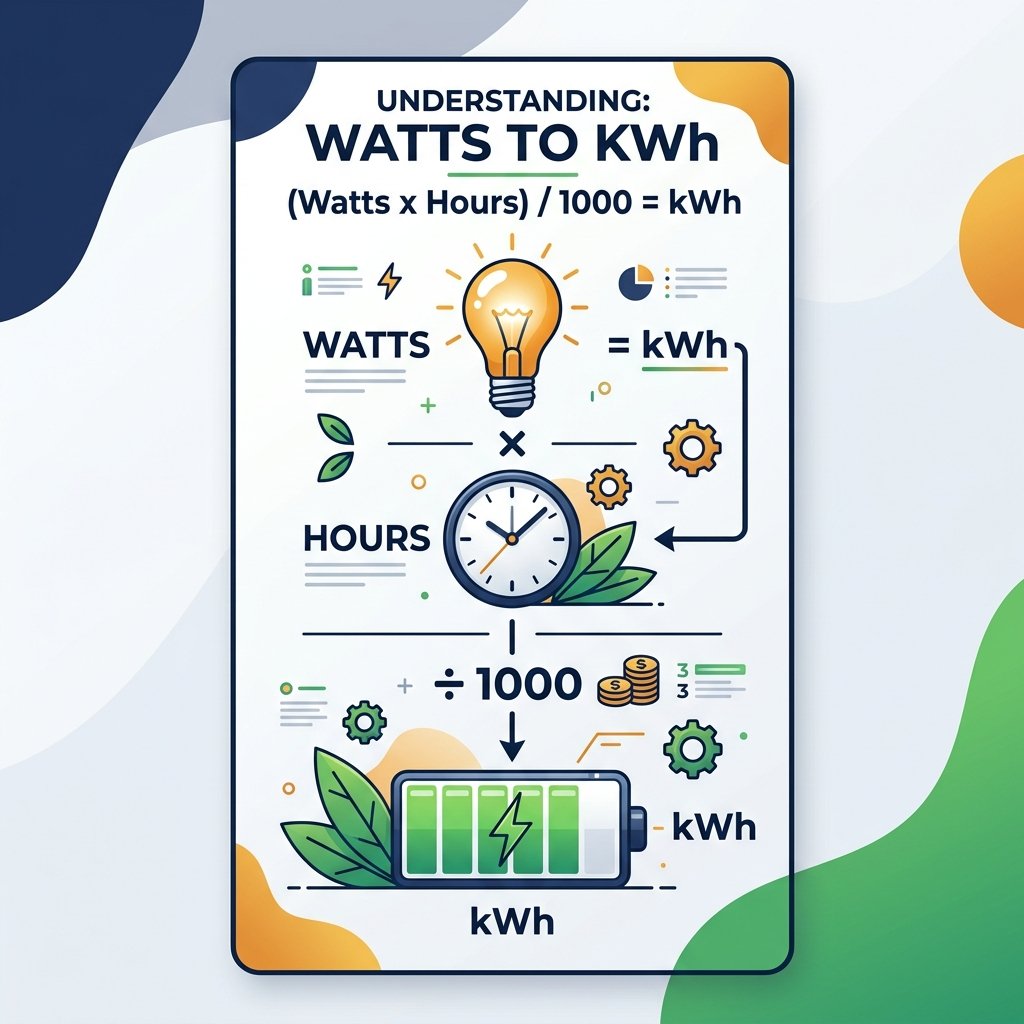
If the 5-star model saves 250 units per year and your electricity rate is Rs 8 per unit, annual saving is Rs 2,000. If the 5-star model costs Rs 6,000 extra, payback is about three years. If your rate is Rs 10 per unit, annual saving becomes Rs 2,500 and payback is faster. If your usage is heavy and the saving is 350 units per year, the difference becomes even stronger.
How To Calculate Payback
Payback is the time needed to recover the higher purchase price of a 5-star AC through lower electricity bills. Use this formula:
Payback Formula
Payback years = Extra purchase price / Annual bill saving
Example: Extra price Rs 6,000 / Annual saving Rs 2,400 = 2.5 years.
This calculation is more useful than asking whether 5-star is always better. It tells you whether it is better for your usage. If you use the AC heavily, payback can be quick. If you use it rarely, the electricity saving may never recover the extra cost.
| Usage Situation | Expected Saving | Payback Meaning |
|---|---|---|
| Guest room, occasional use | Low | 3-star may be enough |
| Bedroom, 6 to 8 hours daily in summer | High | 5-star usually makes sense |
| Living room used on weekends | Moderate to low | Compare price gap carefully |
| Top-floor hot room, long use | Very high | 5-star plus proper sizing is better |
Real 5-Year Cost Example
Let us compare two similar 1.5 ton inverter ACs. Assume the 3-star model costs Rs 36,000 and the 5-star model costs Rs 42,000. The price gap is Rs 6,000. The 3-star model uses 1,050 units per year and the 5-star model uses 800 units per year. The difference is 250 units.
At Rs 8 per unit, the 5-star AC saves Rs 2,000 per year. Over five years, that is Rs 10,000 in electricity savings. After subtracting the Rs 6,000 higher purchase price, the 5-star model is ahead by Rs 4,000. If electricity rates rise, the saving becomes larger.
Now change the usage. If the room is used rarely and annual saving is only Rs 800, the payback becomes 7.5 years. In that case, a 3-star model may be fine. This is why usage pattern matters more than a simple rule.
Why The Label Number May Not Match Your Bill Exactly
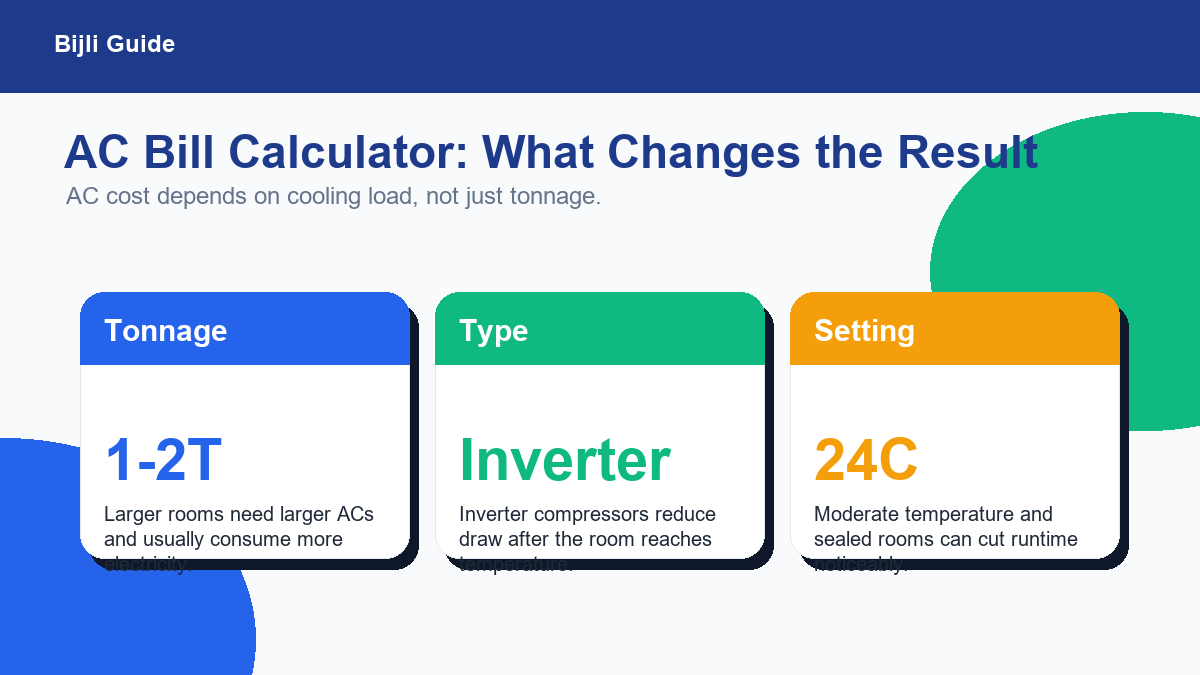
The annual energy consumption printed on a label is based on standard test conditions. Your home is not a test lab. If you live in a very hot city, use the AC at 18 degree C, keep the door open, or have direct sunlight on the room, your actual consumption can be higher. If your room is shaded, sealed, and used at 25 degree C with a fan, actual consumption can be lower.
The label is still useful because it compares models under a common method. Think of it as a comparison tool, not a guarantee of your exact bill. The best use of the label is to compare two similar ACs before buying.
When A 5-Star AC Is Worth It
A 5-star AC is usually worth it when the AC is used regularly. The strongest cases are bedrooms used every night, top-floor rooms, work-from-home rooms, homes in hot cities, and families that plan to keep the AC for many years. In these cases, the higher price is not just a showroom premium. It is a long-term operating cost decision.
If your electricity tariff enters higher slabs after AC use, the saving can be even more important. For example, if AC usage pushes your monthly units into a higher slab, each saved unit may be worth more than the base rate. This is why heavy users should think in total bill impact, not only appliance cost.
When A 3-Star AC Is Enough
A 3-star AC can be a sensible buy for occasional rooms. If the AC is for a guest room, a small office used only a few hours a week, or a city where AC season is short, the 5-star payback may be slow. A good 3-star inverter AC from a reliable brand can still cool well and keep the purchase budget under control.
However, do not buy a cheap 3-star AC if it is undersized, noisy, poorly installed, or has weak service support. A bad installation can destroy the efficiency difference you were trying to calculate. Copper pipe length, vacuuming, drainage, outdoor unit placement, and proper sealing matter.
Other Things To Check Besides Star Rating
- Annual energy consumption: Compare the kWh number, not only stars.
- ISEER value: A higher ISEER means better seasonal efficiency.
- Label period: Star rating thresholds can change over time, so check current label validity.
- Room size and heat load: Correct sizing matters as much as star rating.
- Installation quality: Poor installation can increase electricity use and reduce cooling.
- Warranty and service: Compressor warranty, PCB cost, and local service quality matter for long-term ownership.
- Noise and comfort: Efficiency is important, but the AC must also be comfortable for daily use.
Used AC And Old Star Labels
Be careful when buying a used AC. An old 5-star AC may not behave like a new 5-star AC. Standards can change, parts wear out, coils get dirty, gas may leak, and installation may be poor. A heavily used older AC can consume more electricity than expected.
If buying used, ask for model number, age, service history, cooling test, compressor condition, remote functions, and whether the outdoor unit is noisy. Also budget for installation and servicing. Sometimes a new 3-star inverter AC with warranty is a better decision than an old 5-star AC with unknown condition.
How To Lower AC Consumption Regardless Of Star Rating
Even a 5-star AC can waste electricity if used badly. Even a 3-star AC can perform reasonably if the room is managed well. Keep the temperature around 24 degree C to 26 degree C, use a fan at low speed, clean filters, block direct sunlight, seal door gaps, and avoid cooling empty rooms.
Service the AC before peak summer. Dirty coils and poor airflow increase compressor work. Place the outdoor unit where it can release heat properly. If the outdoor unit is trapped in a closed balcony, the system struggles and consumption rises.
Simple Buying Decision Framework
Use this practical method before buying. First, estimate how many hours the AC will run in a normal summer month. Second, check your electricity bill to understand your real unit rate, including slab impact. Third, compare the annual energy consumption printed on the labels of the shortlisted models. Fourth, calculate the yearly saving and divide the extra purchase price by that saving.
If payback is below three years and you plan to keep the AC for five years or more, the 5-star model is usually a strong choice. If payback is six to eight years and the AC is for occasional use, the 3-star model may be enough. This method is better than asking friends because every home has a different room size, city climate, usage pattern, and tariff slab.
Final Recommendation
For a main bedroom in a hot city, choose a good 5-star inverter AC if budget allows. For a guest room or low-use room, choose a reliable 3-star inverter AC and spend more attention on correct sizing and installation. For a top-floor room or west-facing room, do not undersize the AC just to save purchase cost. An undersized AC can run longer and waste electricity even if its star label looks attractive.
The smartest purchase is not always the highest star rating or the cheapest model. It is the model that matches your room, your expected hours, your local unit rate, and your long-term ownership plan.
Frequently Asked Questions
What does a BEE star rating mean?
A BEE star rating is an energy efficiency label. A higher star rating means the appliance delivers its function with lower energy use compared with lower-rated models in the same category.
How much electricity does a 3-star 1.5 ton AC consume?
A 1.5 ton 3-star inverter AC commonly shows annual consumption around 950 to 1150 units on the label, depending on model, capacity, and label period.
How much electricity does a 5-star 1.5 ton AC consume?
A 1.5 ton 5-star inverter AC commonly shows annual consumption around 750 to 900 units on the label. Actual use can be higher or lower depending on daily hours and room conditions.
Is a 5-star AC worth the higher price?
A 5-star AC is usually worth it if you use the AC daily for several hours during summer. If usage is rare, the payback may be slow and a 3-star model may be practical.
Should I compare only the stars?
No. Compare the annual energy consumption, ISEER value, cooling capacity, label period, warranty, installation quality, and room size suitability.
Can an old 5-star AC consume more than a new 3-star AC?
Yes, it can happen if the old AC has poor maintenance, low gas, dirty coils, damaged insulation, or an older label period. Always compare actual label numbers and condition.
Compare Your AC Options
Use the AC electricity bill calculator to compare 3-star and 5-star models using your expected daily hours and local unit rate.
Use the AC Cost Calculator