Ceiling Fan Electricity Consumption & Running Cost in India
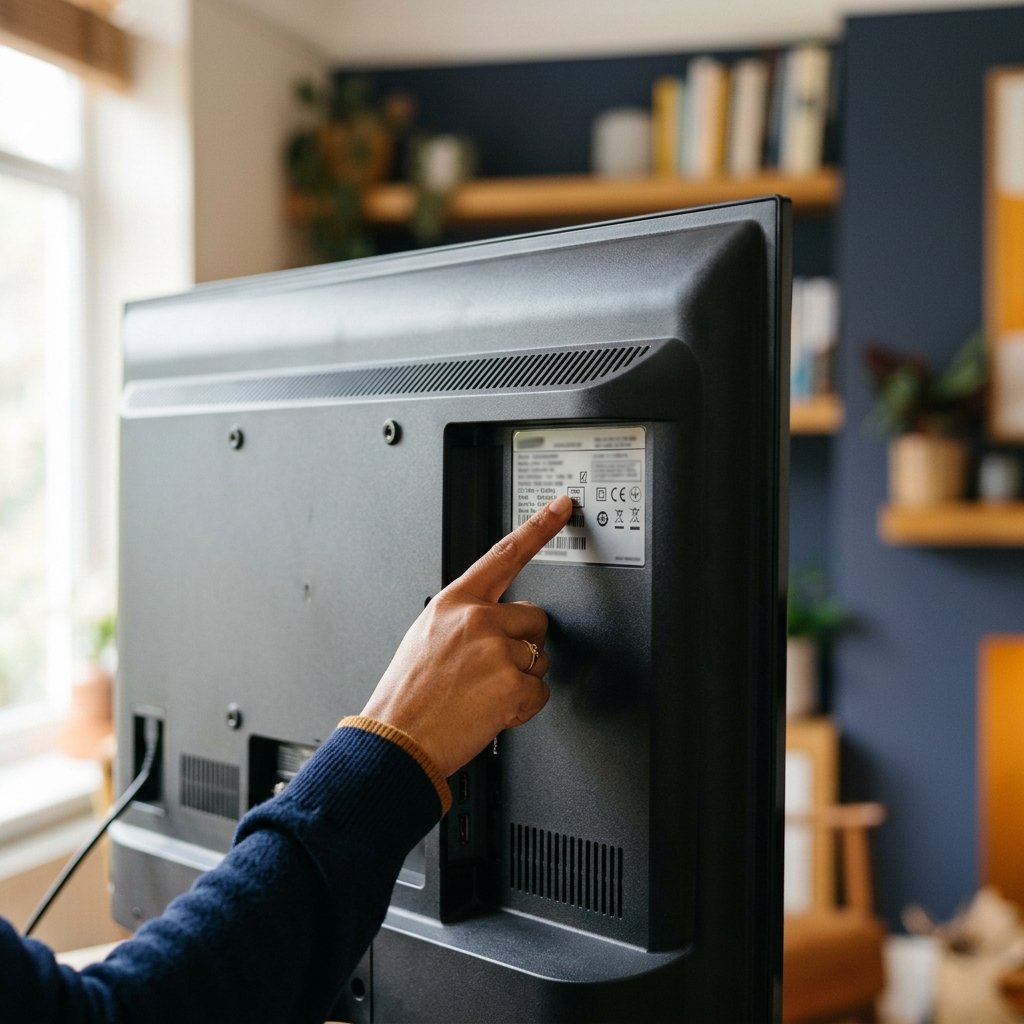
Ceiling fans are easy to ignore because they do not feel like heavy appliances. They do not make the bill jump in one day like an AC or geyser. But they run for long hours, often in every room, and that is why their monthly cost matters. A single old fan may not look expensive. Four old fans running through summer can quietly consume more units than many people expect.
In many Indian homes, fans run in bedrooms at night, in the hall during the day, in kitchens while cooking, and in study rooms or shops for long hours. If each fan uses 75W and runs for 10 to 15 hours daily, the total monthly consumption becomes serious. This is where understanding wattage, regulator type, and BLDC savings helps.
This guide explains how to calculate ceiling fan electricity consumption, how normal fans compare with BLDC fans, how much one fan costs per month, and when replacing old fans actually makes financial sense.
Quick Answer
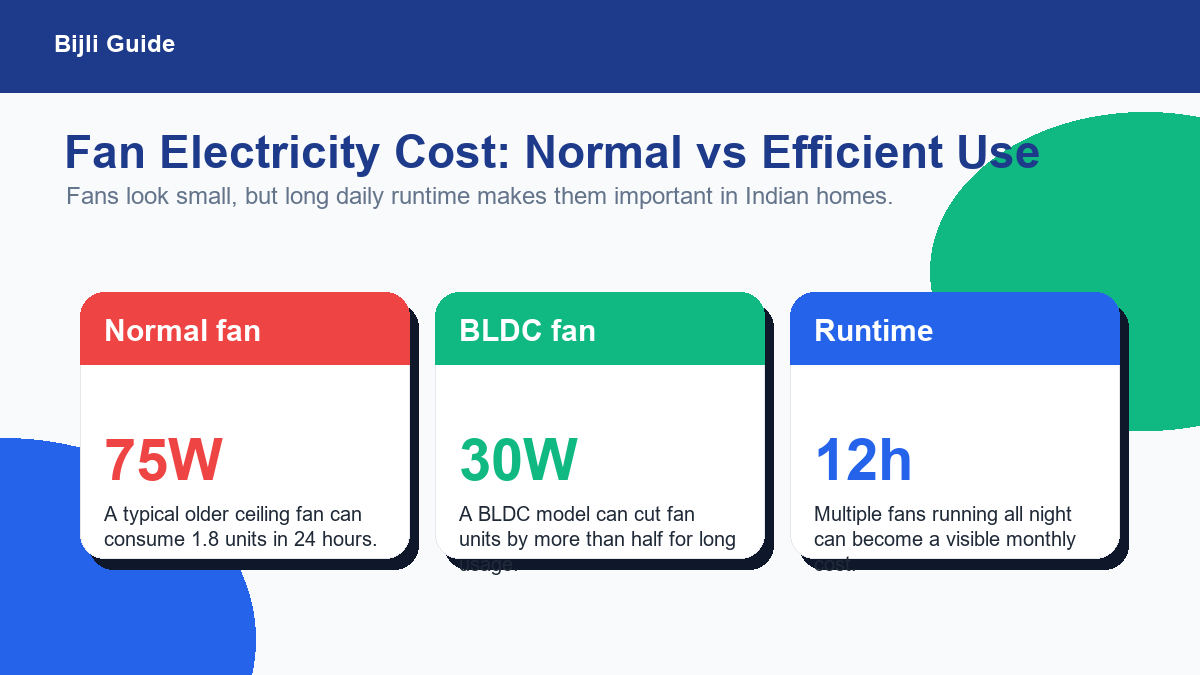
A normal ceiling fan usually consumes 70W to 80W at full speed. If a 75W fan runs for 12 hours daily, it consumes about 27 units per month. At Rs 8 per unit, that is about Rs 216 per month for one fan. A BLDC fan using 30W to 35W can cut this cost by more than half in high-use rooms.
Ceiling Fan Electricity Formula
The formula is simple. You only need the fan wattage and the number of hours used.
Formula
Units = Fan watts x Hours used / 1000
Example: 75W x 12 hours / 1000 = 0.9 units per day. For 30 days, 0.9 x 30 = 27 units per month.
Once you know units, multiply by your electricity rate. If your rate is Rs 8 per unit, 27 units cost Rs 216. If your rate is Rs 10 per unit, the same fan costs Rs 270. If you have four such fans, multiply the monthly amount by four.
Normal Ceiling Fan Monthly Consumption Table
The table below assumes a typical 75W ceiling fan. If your fan is old, decorative, large sweep, or poorly maintained, it may use more. If it is a newer efficient induction fan, it may use slightly less.
| Daily Use | Units Per Day | Units Per Month | Cost at Rs 8/unit |
|---|---|---|---|
| 6 hours | 0.45 units | 13.5 units | Rs 108 |
| 10 hours | 0.75 units | 22.5 units | Rs 180 |
| 12 hours | 0.9 units | 27 units | Rs 216 |
| 24 hours | 1.8 units | 54 units | Rs 432 |
Normal Fan vs BLDC Fan
BLDC stands for brushless direct current. A BLDC fan uses a different motor and control system from a traditional induction fan. The important point for a homeowner is not the engineering term. The important point is that a BLDC fan can deliver useful air while using much less electricity.
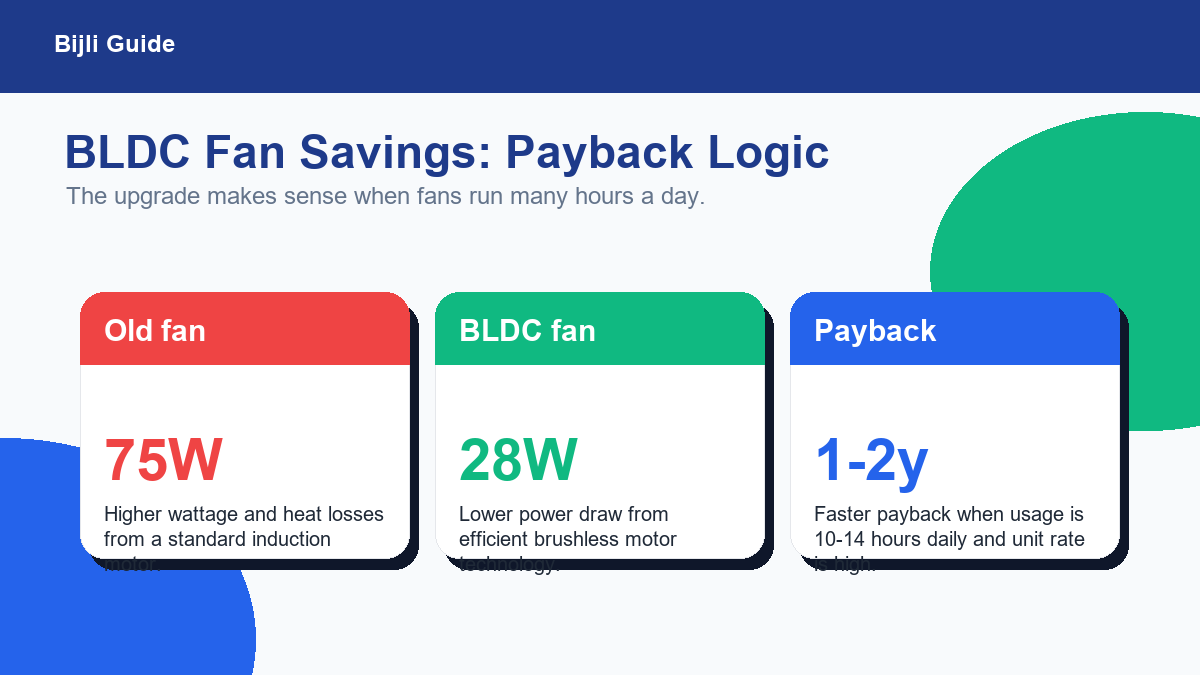
A normal fan may use 70W to 80W at full speed. A BLDC fan commonly uses 28W to 35W at full speed, and much less at lower speeds. This difference becomes valuable when the fan runs every day for many hours.
| Feature | Normal Ceiling Fan | BLDC Ceiling Fan |
|---|---|---|
| Full speed wattage | 70W to 80W | 28W to 35W |
| 12 hour monthly units | About 27 units | About 11 to 13 units |
| Remote control | Usually no | Common |
| Best for | Low-use rooms, tight budget | Bedrooms, halls, shops, long daily use |
| Typical savings | None | 40 percent to 60 percent in many homes |
Example: Four Fans In A Typical Home
Let us take a realistic home with four fans: one in the living room, two in bedrooms, and one in the kitchen or study. Suppose each normal fan is 75W and the average use is 12 hours daily. One fan consumes 27 units monthly. Four fans consume 108 units monthly.
At Rs 8 per unit, four normal fans cost about Rs 864 per month. If these are replaced with 35W BLDC fans, one fan may consume about 12.6 units monthly. Four fans consume about 50.4 units. Cost becomes about Rs 403. The monthly saving is about Rs 461.
If each BLDC fan costs Rs 2,000 more than a basic normal fan, four fans cost Rs 8,000 extra. At Rs 461 monthly savings, the payback can be around 17 to 18 months. After that, the lower electricity bill continues to help. This is why BLDC fans make the most sense in homes where fans run daily.
Does Fan Speed Affect Consumption?
Fan speed can affect consumption, but the result depends on your regulator and fan type. This is where many people get confused.
Old resistor regulators: These are the older bulky regulators that get warm. They reduce fan speed by wasting some power as heat. With these, reducing speed may not save as much electricity as you expect.
Electronic step regulators: These are more efficient than old resistor regulators. They reduce power more effectively when speed is lowered.
BLDC fans: These save strongly at lower speeds. A BLDC fan may use only a few watts at the lowest setting and still provide enough air for mild weather or night use.
Why Your Fan May Consume More Than Expected
If your fan is old, noisy, slow, or heating at the motor, it may be wasting power. Dust on blades also affects air delivery. When a fan moves less air, people run it at higher speeds for longer. Poor air delivery can therefore increase comfort problems and electricity use at the same time.
Blade size also matters. A larger sweep fan used in a small room may not be efficient. A decorative fan with heavy blades may use more power while moving less air. Some fans look premium but are not necessarily efficient. Always compare wattage and air delivery, not only design.
Inverter backup users should pay special attention. Normal fans drain home inverter batteries much faster. A BLDC fan reduces battery load, which can mean longer backup during power cuts. For areas with frequent outages, this comfort benefit is sometimes as important as the bill saving.
How To Choose Which Fan To Replace First
You do not have to replace every fan at once. Start with the highest-use rooms. A bedroom fan that runs every night gives faster savings than a guest-room fan used twice a month. A shop fan running all day gives even faster savings.
Use this priority order: living room fan, main bedroom fan, children's room fan, work-from-home room fan, shop or office fan, then low-use guest room fan. If budget is limited, replacing just two high-use fans can still reduce the monthly bill noticeably.
Ceiling Fan Savings Table
| Scenario | Normal Fan Units/Month | BLDC Fan Units/Month | Monthly Saving at Rs 8/unit |
|---|---|---|---|
| One fan, 8 hours/day | 18 units | 8.4 units | About Rs 77 |
| One fan, 12 hours/day | 27 units | 12.6 units | About Rs 115 |
| Three fans, 12 hours/day | 81 units | 37.8 units | About Rs 346 |
| Four fans, 16 hours/day | 144 units | 67.2 units | About Rs 614 |
Practical Ways To Reduce Fan Electricity Cost
- Turn fans off in empty rooms: Fans cool people, not rooms. Leaving a fan on in an empty room only wastes electricity.
- Clean blades regularly: Dust reduces air delivery and makes the fan less useful at lower speeds.
- Use cross ventilation: Open windows at cooler times of day so the fan moves fresh air instead of only circulating trapped heat.
- Replace old regulators: If you still use old heating-type regulators, consider electronic regulators or BLDC fans.
- Use BLDC fans in high-use rooms: This gives better payback than replacing rarely used fans first.
- Combine fan with AC smartly: Running a fan at low speed with AC at 25 degree C or 26 degree C can reduce AC workload.
Room By Room Fan Usage Plan
A useful way to reduce fan cost is to stop treating every fan equally. A bedroom fan used for eight hours every night is not the same as a guest room fan used twice a month. If you are deciding where to spend money first, list your rooms and write down the likely daily usage hours. This simple exercise shows which fan has the highest saving potential.
In many homes, the living room fan runs during the evening, the main bedroom fan runs all night, and children's room fans run for study and sleep. Kitchen fans may run for shorter periods but at high speed because cooking heat builds quickly. A work-from-home room can quietly become a high-use room if the fan runs from morning to evening.
Start replacement with the fan that runs longest. If a fan runs 14 hours daily, upgrading from 75W to 35W saves more than upgrading a fan that runs only 2 hours. This is also why shops, clinics, tuition rooms, and offices often recover BLDC fan cost faster than homes.
Fan, Ventilation, And Comfort
A fan does not lower room temperature the way an AC does. It makes you feel cooler by moving air across the skin. This is why a fan in an empty room is wasted electricity. The room is not becoming cooler in a meaningful way. The fan is only useful when someone is there to feel the air movement.
Ventilation matters. If a room is filled with hot trapped air, the fan only circulates that heat. Opening windows during cooler morning or evening hours helps remove stored heat. Once the outside air becomes hotter than inside, close curtains and reduce direct sunlight. The fan then has less heat to fight against.
In humid weather, air movement becomes even more important because sweat evaporates slowly. A clean fan at the right height can feel much better than a dusty fan at full speed. Comfort is not only wattage. It is also blade design, air delivery, room layout, and whether furniture blocks airflow.
Buying Checklist For A New Fan
Before buying a fan, check the wattage, sweep size, air delivery, warranty, regulator compatibility, and service support. Do not buy only on looks. Some decorative fans have heavy blades and poor air delivery. They may look premium but still disappoint in summer.
For most Indian rooms, a 1200 mm sweep fan is common. Large rooms may need a bigger fan or two fans placed correctly. Small rooms may not need a very large decorative fan. If the fan is for a bedroom, noise matters. If it is for a hall, air throw matters. If it is for an inverter backup home, wattage matters strongly.
For BLDC fans, check whether the remote is easy to replace, whether there are wall-control options, and whether the brand has service in your city. A low-watt fan is useful only if it is reliable and comfortable for daily use.
Maintenance Checklist
Clean the fan blades at least once a month in dusty areas. Dust changes blade shape and reduces air movement. Tighten loose screws if the fan wobbles. A wobbling fan may make noise, reduce comfort, and feel unsafe. If the fan is very slow even at full speed, get the capacitor checked. A weak capacitor can make a normal fan perform badly.
If a fan makes grinding sounds, heats too much, or smells burnt, stop using it and call an electrician. Saving electricity is important, but electrical safety is more important. Old wiring, loose connections, and overloaded switchboards should not be ignored.
Frequently Asked Questions
How many watts does a normal ceiling fan use?
A standard induction-motor ceiling fan used in many Indian homes consumes around 70W to 80W at full speed. Some older or decorative fans can consume more.
How many units does a ceiling fan consume in 24 hours?
A 75W fan running for 24 hours consumes 1.8 units. A 35W BLDC fan running for 24 hours consumes 0.84 units.
Does reducing fan speed save electricity?
It depends on the regulator. Old resistor regulators waste power as heat. Electronic regulators and BLDC fans save more electricity at lower speeds.
Is a BLDC fan worth buying?
A BLDC fan is usually worth it in rooms where the fan runs for many hours every day. The payback is faster in homes with multiple fans and higher unit rates.
How much can one BLDC fan save per month?
Compared with a 75W normal fan running 12 hours daily, a 35W BLDC fan can save about 14 units per month. At Rs 8 per unit, that is about Rs 112 per month.
Should I replace all fans at once?
Start with the rooms where fans run the longest, such as bedrooms, living rooms, shops, or rooms used by children and elders. Replacing rarely used fans gives slower payback.
Calculate Your Fan Savings
Use the BLDC fan savings calculator to compare your old fan wattage, new fan wattage, daily usage hours, and electricity rate.
Use the BLDC Savings Calculator