Fixed Charges vs Energy Charges in Your Electricity Bill Explained

One of the most common complaints among Indian homeowners is returning from a month-long vacation, only to find an electricity bill waiting for them. "My house was locked! My main switch was off! Why am I being billed?"
To understand why this happens, you need to understand the two core components of every electricity bill in the world: Fixed Charges and Energy Charges.
Quick Answer
Fixed Charges are a mandatory monthly "subscription fee" you pay just to have the cables connected to your house, based on your Sanctioned Load (kW). Energy Charges are the variable fees you pay for the actual electricity (Units) you consume.
What are Fixed Charges? (The Infrastructure Fee)
Imagine your internet or DTH TV connection. You pay a monthly fee of ₹500 even if you don't turn on the TV for a month. Fixed charges on an electricity bill work the exact same way.
The power company has installed transformers, heavy copper cables, and meters specifically sized for your house. They must maintain this infrastructure 24/7 so that the exact second you decide to turn on your AC, the power is there. You pay for this readiness via Fixed Charges.
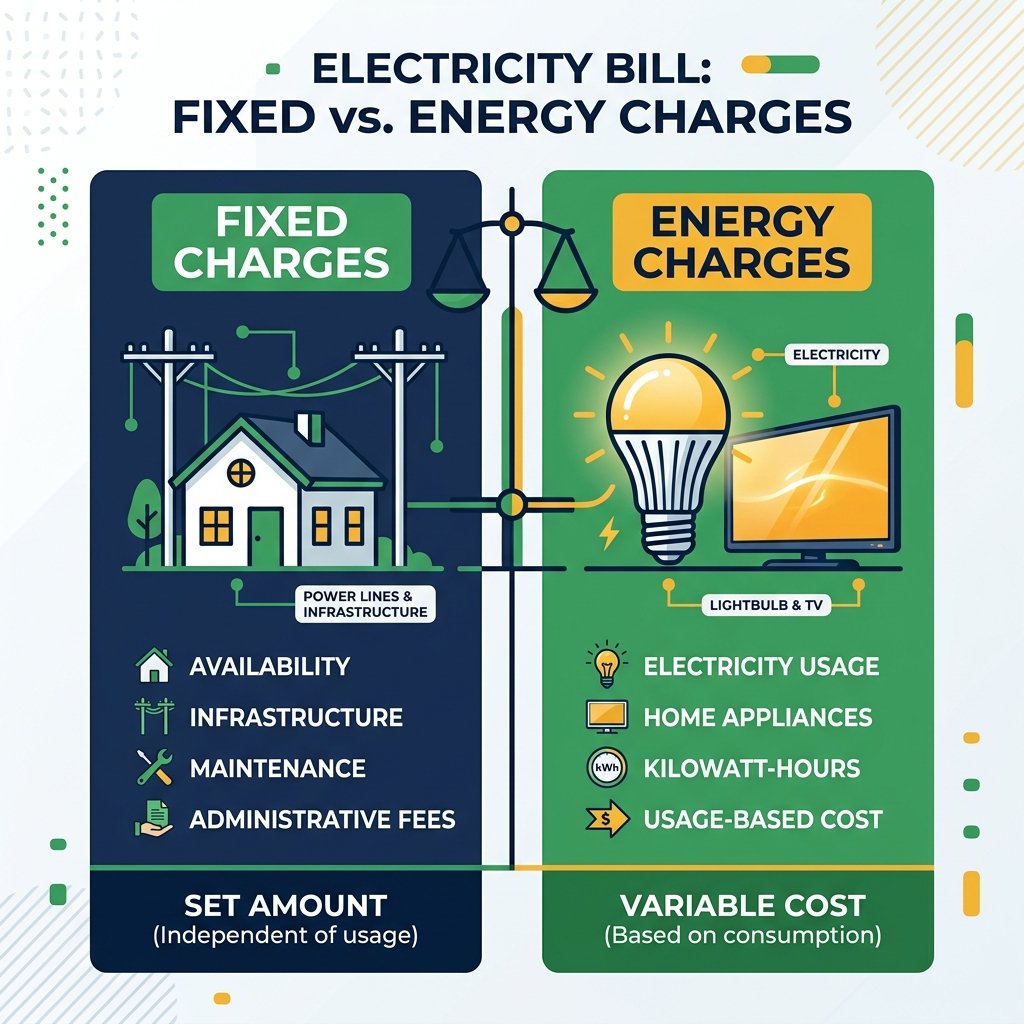
How is the Fixed Charge Calculated?
It is entirely based on your Sanctioned Load (kW). The sanctioned load is the maximum amount of power you are legally allowed to draw at any given second.
- If your house has 1 AC, you might have a Sanctioned Load of 3 kW.
- If your rate is ₹100 per kW, your Fixed Charge is ₹300 every month, even if your main switch is turned off.
What are Energy Charges? (The Usage Fee)
Energy Charges are exactly what they sound like. You are billed for every single Unit (kWh) of electricity your appliances consume.
Unlike fixed charges, you have 100% control over your energy charges. If you turn off your AC, your energy charges drop. If you lock your house, your energy charges become ₹0.
| Feature | Fixed Charges | Energy Charges |
|---|---|---|
| Basis of Calculation | Sanctioned Load (kW) | Actual Units Consumed (kWh) |
| If you lock your house? | Still Billed | Drops to ₹0 |
| How to reduce it? | Apply to reduce your sanctioned load | Turn off appliances, buy 5-Star appliances |
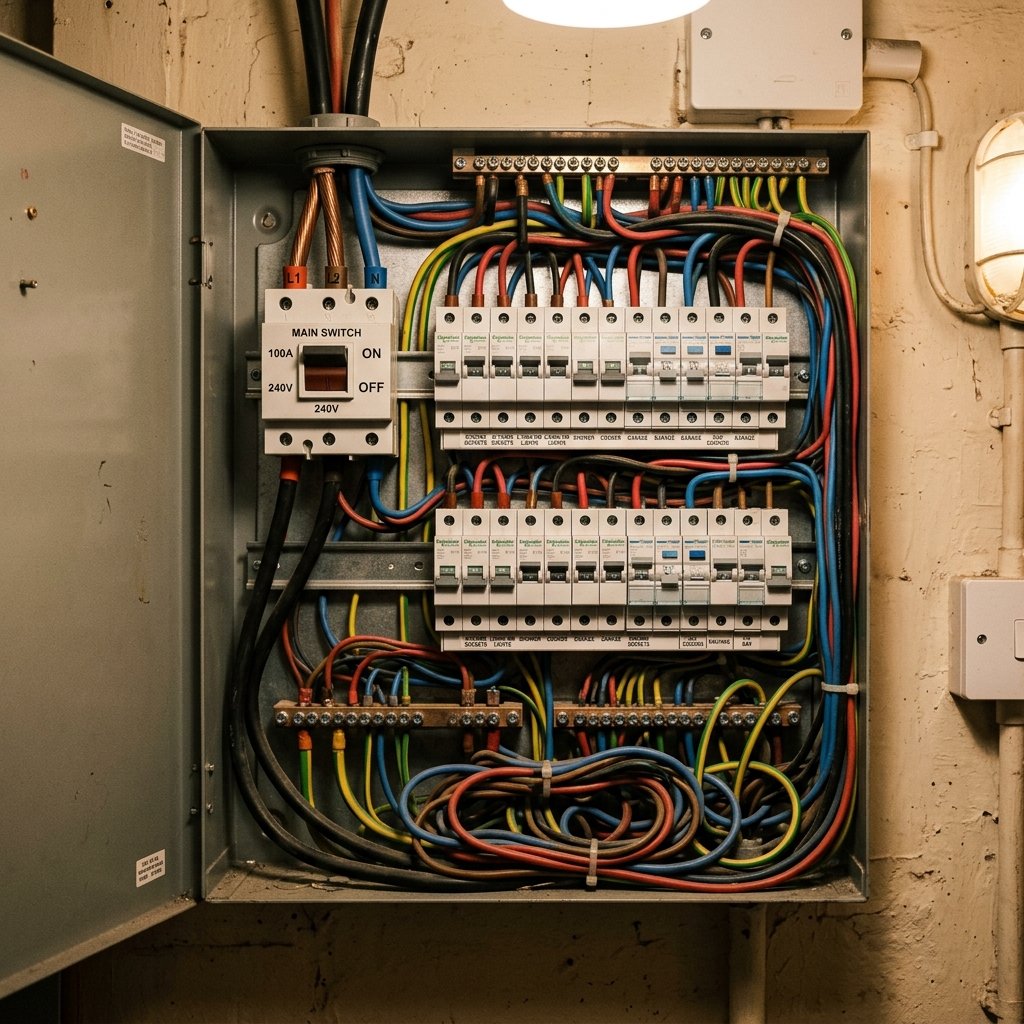
A Costly Mistake: Over-Sanctioned Load
Many homeowners make a massive financial mistake when building a house. They apply for a 15 kW sanctioned load thinking they might install 6 ACs in the future. But for the next 5 years, they only use 2 ACs (requiring just 4 kW).
Because their sanctioned load is 15 kW, they are paying roughly ₹1,500 every single month in Fixed Charges for infrastructure they aren't using. That is ₹18,000 wasted every year! Always ensure your sanctioned load matches your actual heavy appliance usage.
Frequently Asked Questions
Why did I get an electricity bill when my house was locked for a month?
Even if you consume 0 units, your electricity provider still charges a 'Fixed Charge' just for maintaining the infrastructure, transformers, and cables required to keep your house connected to the grid.
How are Fixed Charges calculated?
Fixed charges are calculated based on your 'Sanctioned Load' (measured in kW). For example, if the fixed charge is ₹100/kW and your sanctioned load is 5kW, you will pay ₹500 every month, regardless of usage.
Can I reduce my Fixed Charges?
Yes. If your sanctioned load is 7kW but you only ever use 2kW (perhaps you removed older ACs), you can formally apply to your DISCOM to reduce your sanctioned load, which will permanently lower your fixed monthly charges.
What are Energy Charges?
Energy charges are variable. They are based entirely on how much electricity (Units or kWh) you actually consume. If you use 0 units, your energy charge is ₹0.
Does solar power eliminate Fixed Charges?
Usually no. Even if your solar panels generate 100% of the electricity you consume (reducing your Energy Charge to ₹0), you are still connected to the grid for net-metering. Therefore, the DISCOM will still bill you the monthly Fixed Charge.
Calculate Both Charges Instantly
Our Electricity Bill Calculator automatically separates your bill into Fixed Charges and Energy Charges based on your state's tariff data.
Use the Electricity Bill Calculator