Electric Geyser Electricity Consumption & Cost in India
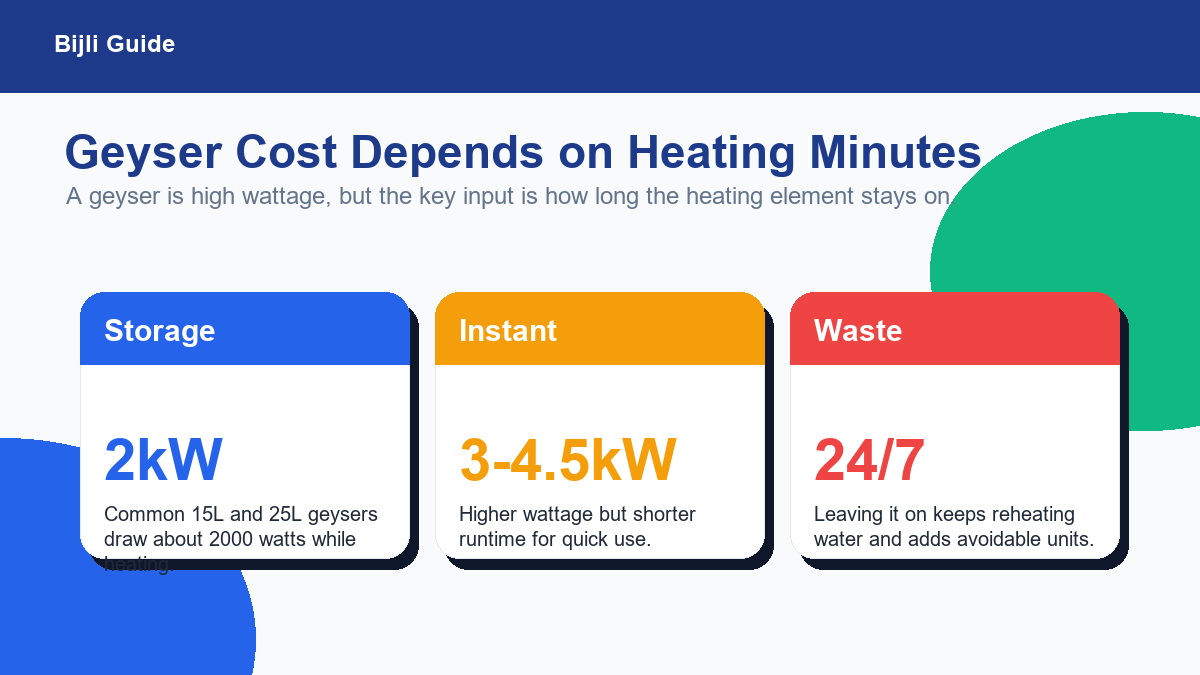
When winter starts, many Indian homes see the electricity bill rise even though AC usage has stopped. One of the main reasons is the electric geyser. Heating water takes a lot of energy. A geyser may be used for only 20 to 60 minutes a day, but during that time it can draw 2000W, 3000W, or more.
The good news is that geyser consumption is easy to understand once you know the formula. The confusing part is actual usage. A storage geyser does not draw full power every minute it is switched on. It heats water, reaches a temperature, cuts off through the thermostat, and then switches on again if the water cools. Because of this, the way you use the geyser can matter as much as the wattage printed on the body.
This guide explains how many units a geyser consumes, how 15L and 25L geysers differ, when an instant geyser makes sense, and how to reduce hot water cost without making mornings uncomfortable.
Quick Answer
A common Indian storage geyser is rated at 2000W. If it runs continuously for 30 minutes, it consumes 1 unit. A family using hot water daily may add around 45 to 90 units per month from geyser use, depending on bath duration, water temperature, tank size, and whether the switch is left on unnecessarily.
Electric Geyser Consumption Formula
The basic formula is the same as any appliance:
Formula
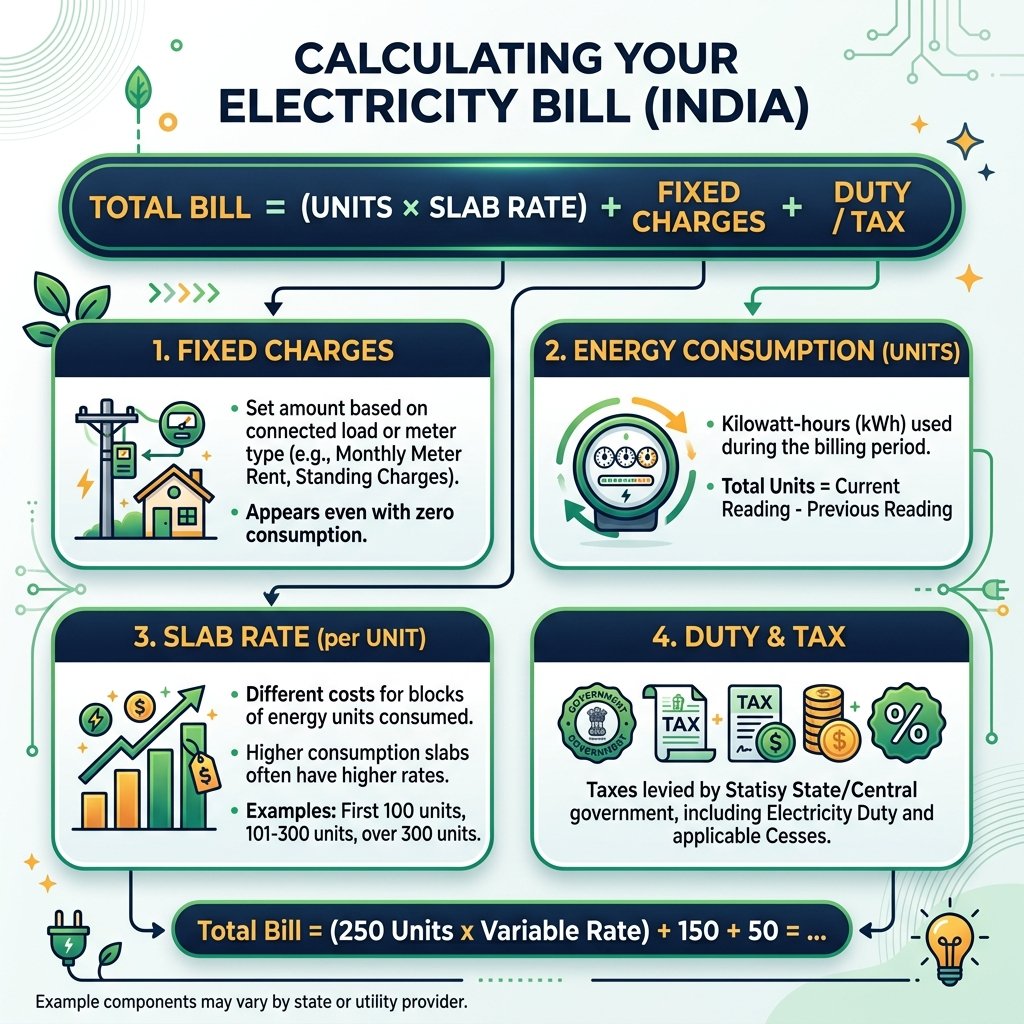
Units = Geyser watts x Running hours / 1000
Example: 2000W x 0.5 hours / 1000 = 1 unit.
The important phrase is "running hours." If the geyser switch is on for one hour but the thermostat heats for only 25 minutes, the consumption is based on the 25 minutes of heating, not the full hour. However, if you leave the switch on all day, the thermostat may reheat the tank many times, and those small heating cycles can waste a lot of electricity.
Storage Geyser vs Instant Geyser
Most homes choose between a storage geyser and an instant geyser. A storage geyser heats a tank of water and keeps it ready. An instant geyser heats water while water flows. Both can be useful, but they are not ideal for the same situation.
| Geyser Type | Common Wattage | Best Use | Electricity Behavior |
|---|---|---|---|
| 15L storage geyser | 2000W | One or two people, bucket bath, small bathroom | Heats tank, then thermostat cuts off |
| 25L storage geyser | 2000W to 3000W | Family bathrooms, shower use, colder regions | More stored hot water, more standby loss if unused |
| Instant geyser | 3000W to 4500W | Handwash, kitchen, short use, small water volume | High power but short running time |
15L vs 25L Geyser Electricity Cost
A 25L geyser does not automatically use more units every second if the wattage is the same. A 2000W 15L geyser and a 2000W 25L geyser both draw 2kW while heating. The difference is how much water they heat and how much hot water remains unused.
If one person needs only 10 to 12 liters of hot water, heating a 25L tank every morning can waste energy. If four people use the same bathroom, a 15L geyser may need repeated heating cycles, which can also waste time and electricity. The right size depends on family size, bathing style, climate, and whether you use a bucket or shower.
| Household Use | Practical Geyser Size | Estimated Daily Units | Monthly Cost at Rs 8/unit |
|---|---|---|---|
| One person, bucket bath | 10L to 15L | 0.6 to 1 unit | Rs 144 to Rs 240 |
| Two people, normal use | 15L | 1 to 1.8 units | Rs 240 to Rs 432 |
| Family of four | 25L | 2 to 3 units | Rs 480 to Rs 720 |
| Long hot showers | 25L or larger | 3 to 5 units | Rs 720 to Rs 1,200 |
How The Thermostat Changes Consumption
A storage geyser has a thermostat. When water reaches the set temperature, the thermostat cuts power to the heating element. This is why the red light on many geysers turns off after some time. The tank still stores hot water, but the heater is not drawing full power at that moment.
This also explains a common misunderstanding. If a 2000W geyser switch is on for two hours, it does not always consume 4 units. It may consume 1 unit to heat water first, then small additional amounts if the water cools. But if the geyser is left on for the full day, repeated reheating can still waste many units across a month.
Good insulation reduces reheating. Poor insulation, cold weather, a windy bathroom wall, or an old geyser can increase heat loss. If the outer body of the geyser feels unusually hot, that can indicate wasted heat.
Bucket Bath vs Shower Consumption
A bucket bath usually gives better control over hot water. You heat a fixed amount, mix it with cold water, and use it carefully. A shower can feel more comfortable but may use much more hot water because water keeps flowing while you soap, wait, or adjust temperature.
If two people take long hot showers from the same geyser, the heater may run longer and may reheat between baths. In cold regions, incoming water is colder, so the geyser needs more energy to reach the same final temperature. That is why a winter bill in North India can rise sharply compared with a mild winter city.
Why Leaving The Geyser On Is Expensive
Leaving the geyser on all day is one of the most common wasteful habits. Many people switch it on in the morning and forget it. The thermostat prevents continuous heating, but it cannot prevent standby loss. As stored water loses heat, the geyser reheats it. This can happen again and again.
The better habit is to switch the geyser on 15 to 25 minutes before use, depending on tank size and season. After bathing, switch it off. If your household has fixed bath timings, a timer switch can help. In rental homes or busy families, even a simple reminder near the bathroom switch can save money.
Wiring And Safety Considerations
Geysers draw high current. A 2000W geyser on a 230V supply draws around 8.7 amps. A 3000W instant geyser draws around 13 amps. This is why geysers need proper wiring, correct plug and socket, earthing, and MCB protection. Do not run a high-watt geyser from a weak extension board.
If the plug heats, the MCB trips, lights dim, or you smell burning near the switchboard, stop using it and call a qualified electrician. Electricity saving should never come at the cost of safety. Old bathrooms with poor earthing deserve special attention.
How To Reduce Geyser Electricity Consumption
- Switch on only before use: Heat water close to bath time instead of keeping the tank hot all day.
- Use the right tank size: A single person usually does not need a large tank every day.
- Lower the thermostat if possible: Extremely hot water is usually mixed with cold water, which means extra heating was wasted.
- Fix leaking hot taps: A small hot water leak can force reheating and waste units.
- Use a bucket for controlled use: This is often cheaper than long showers.
- Insulate hot water pipes: Useful when the pipe run is long or the bathroom wall is cold.
- Service old geysers: Scale buildup can reduce heating efficiency and increase time to heat.
Best Daily Routine For Lower Geyser Bills
The easiest saving method is to build a fixed routine. Switch the geyser on before bathing, wait only as long as needed, use the hot water, and switch it off. For a 15L geyser, many homes need about 15 to 20 minutes in moderate winter. In very cold weather, it may take longer. For a 25L geyser, heating time can be higher because more water is stored.
If three or four people bathe one after another, the geyser can be used more efficiently than heating the tank separately for each person. But if there is a long gap between baths, the tank loses heat and reheats again. In that case, a timer or disciplined switch use helps.
A common wasteful pattern is this: switch on at 6 AM, first person bathes at 7 AM, second person bathes at 9 AM, and the switch remains on until noon. The thermostat prevents nonstop heating, but the tank is kept hot for hours. This convenience can cost many extra units across a winter month.
Climate And City Difference
Geyser consumption is not the same in every city. In a colder place, incoming water temperature is lower. The geyser must add more heat to reach a comfortable bathing temperature. In a milder city, water may already be warmer and heating time is shorter.
For example, a family in Delhi, Jaipur, Srinagar, Shimla, or parts of North India may use the geyser more heavily in winter than a family in Mumbai, Chennai, or coastal areas. The unit calculation formula is the same, but daily heating minutes change. This is why one person's geyser bill estimate may not match another person's bill even with the same 2000W appliance.
Bathroom location also matters. A geyser mounted on an outside wall in a cold bathroom may lose heat faster than one in a warmer enclosed area. Long hot water pipes also lose heat before the water reaches the tap. If you wait a long time for hot water to arrive, some heat is being wasted in the pipe run.
Common Geyser Myths
Myth 1: A bigger geyser always consumes more electricity. A bigger tank does not consume more every second if wattage is the same, but it can consume more overall when you heat more water than you use.
Myth 2: Thermostat cut-off means leaving it on is free. The thermostat cuts off after heating, but standby loss still causes reheating. Leaving it on for hours can waste electricity.
Myth 3: Instant geysers always save money. Instant geysers avoid stored-water loss, but they draw high power and may not suit long showers. They also need proper wiring and may not be ideal for every bathroom.
Myth 4: Star rating alone decides the bill. Star rating helps, but usage habits, tank size, thermostat setting, water temperature, and bath duration decide the final bill.
Buying Checklist For A New Geyser
Before buying, decide the use case. For one person or a small bathroom, 10L to 15L can be enough. For a family bathroom, 25L may be practical. For kitchen or handwash use, an instant geyser may be suitable. Check wattage, warranty on tank and heating element, safety valve, pressure rating, and whether the model is suitable for high-rise water pressure.
If you live in a hard water area, tank material and serviceability matter. Scale buildup can reduce performance over time. A cheaper geyser that fails early or takes too long to heat may not be cheaper in the long run. Also check installation cost, plumbing requirement, earthing, and MCB suitability before finalizing.
Frequently Asked Questions
How many watts is a normal electric geyser?
Most storage geysers used in Indian bathrooms are rated around 2000W. Instant geysers are often 3000W to 4500W but run for a shorter time.
How many units does a 2000W geyser consume in 30 minutes?
A 2000W geyser running continuously for 30 minutes consumes 1 unit. Actual use may be lower if the thermostat cuts off after the water reaches temperature.
Is a 15L geyser cheaper to run than a 25L geyser?
A 15L geyser usually heats less water and can be cheaper for one or two people. A 25L geyser may be better for a family but wastes electricity if one person heats the full tank and uses only a little water.
Should I keep the geyser on all day?
No. Keeping a storage geyser on all day wastes electricity because the thermostat reheats water repeatedly as the tank loses heat.
Is an instant geyser more efficient than a storage geyser?
An instant geyser heats water only when needed, so it avoids standby loss. But it has higher wattage and may need suitable wiring. For short handwash or kitchen use it can be efficient; for long showers, storage may be more comfortable.
How can I reduce geyser electricity cost?
Use a timer or switch it on only before bathing, choose the right tank size, reduce thermostat temperature where possible, fix leaking taps, and avoid mixing too much overheated water with cold water.
Calculate Your Winter Bill
Use the geyser electricity cost calculator to enter wattage, daily heating minutes, days used, and your local unit rate.
Use the Geyser Cost Calculator