Commercial vs Residential Electricity Rates in India
If you have ever compared your home electricity bill to the bill of a small retail shop, you were probably shocked by the difference. Even if both properties consumed exactly 300 units, the shop's bill is likely double the amount.
In India, electricity is not sold at a single flat price. It is heavily categorized. Let's look at the immense financial gap between Commercial and Residential tariffs, and why running a business on a home meter is a dangerous legal game.
Quick Answer
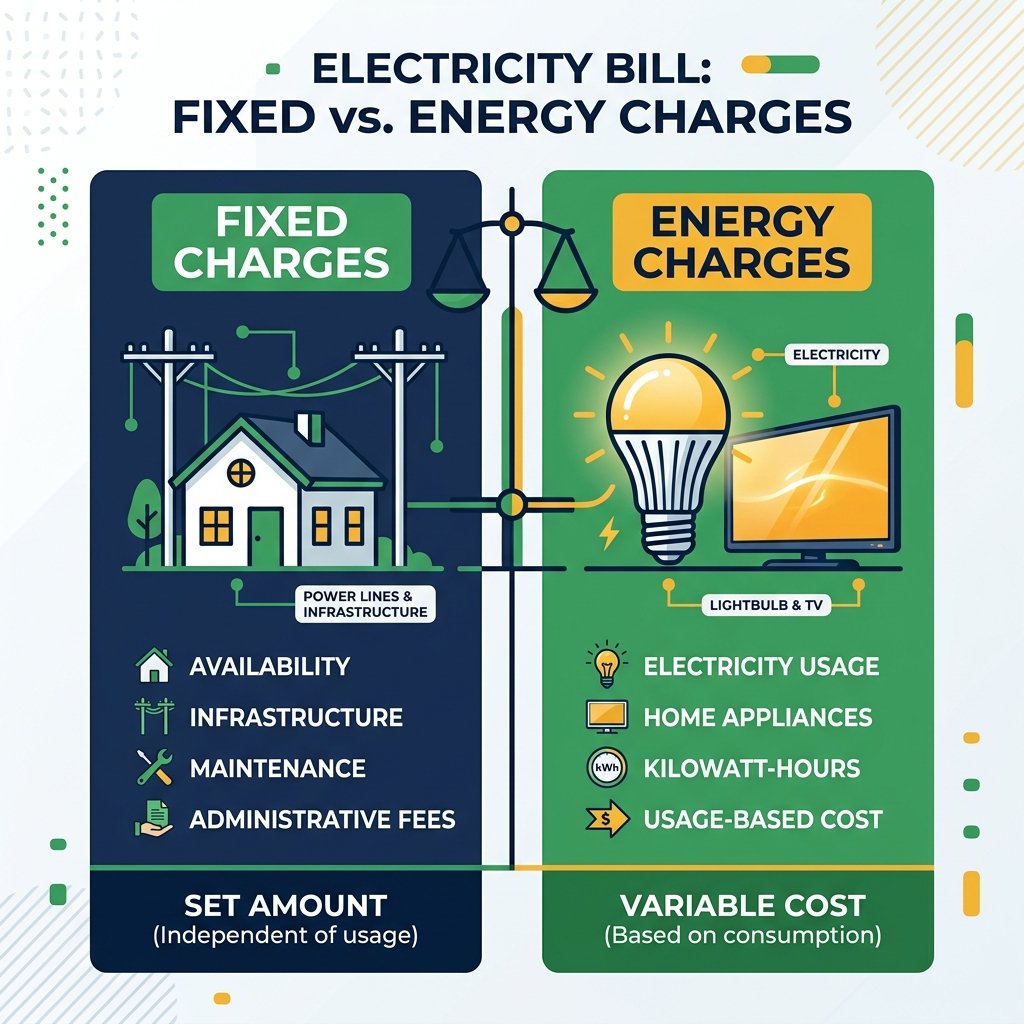
Residential tariffs are heavily subsidized, usually costing between ₹4 to ₹7 per unit. Commercial tariffs are designed for profit-making entities and usually cost ₹9 to ₹13 per unit. Furthermore, the mandatory Fixed Charges on a commercial meter are often 3x to 4x higher than a home meter.
Why the massive price gap? (Cross-Subsidy)
The cost to generate 1 unit of electricity from coal is roughly ₹4.50. So how does the government provide electricity to farmers for ₹0, or to BPL (Below Poverty Line) households for ₹3.00?
They use a system called Cross-Subsidization. The State Electricity Boards charge businesses, malls, IT parks, and retail shops exorbitant rates (₹10 to ₹14 per unit). The massive profits generated from the commercial sector are then used to artificially lower the price for the residential and agricultural sectors.
| Metric (Example Avg) | Residential (Domestic) | Commercial (Non-Domestic) |
|---|---|---|
| Base Energy Charge | ₹5.50 per Unit | ₹10.50 per Unit |
| Fixed Charges (per kW) | ₹100 / month | ₹350 / month |
| Electricity Duty Tax | ~5% to 16% | ~20% to 25% |
| Total Bill for 500 Units (5kW) | ~ ₹3,500 | ~ ₹8,500 |
The Danger of "Tariff Misuse"
Because the price gap is so large, many people try to cheat the system. A common scenario is converting the ground floor of a residential house into a grocery shop or boutique, but running the lights and ACs off the home's residential meter.
This is highly illegal. Under Section 126 of the Electricity Act, 2003, this is termed "Unauthorized Use of Electricity."
The Penalty is Severe
If a vigilance squad inspects the property, they will not just ask you to change the meter. They will calculate the penalty retroactively for the past 12 months. The penalty is charged at twice the highest commercial rate.
For example, if they estimate the shop used 200 units a month, they will bill 2,400 units (12 months) at ₹24 per unit (double the ₹12 commercial rate). You will be handed a penalty bill of ₹50,000+ on the spot, and power will be disconnected until paid.
Frequently Asked Questions
Why are commercial electricity rates higher than residential?
In India, the government uses a system called 'cross-subsidization'. They charge commercial and industrial users very high rates, and use those profits to subsidize (lower) the rates for poor households and farmers.
Can I run a small business from my residential home?
If it is a small home office or freelance work, DISCOMs usually ignore it. However, if you open a public shop, manufacturing unit, or a large scale coaching center in a residential property, the DISCOM will fine you and force you to install a commercial meter.
What happens if I use a residential connection for commercial work?
This is considered 'Unauthorized Use of Electricity' under Section 126 of the Electricity Act. If caught by vigilance inspectors, you will be hit with a massive penalty, often calculated retroactively for the past 12 months at double the commercial rate.
Are fixed charges higher for commercial meters?
Yes, drastically. A residential fixed charge might be ₹100 per kW. A commercial fixed charge for a shop can be ₹300 to ₹500 per kW every month.
Calculate Your Bill Accurately
Our Electricity Bill Calculator allows you to switch between Domestic and Commercial tariff structures to instantly see the financial difference.
Use the Electricity Bill Calculator