Dishwasher Electricity & Water Cost in India: Myth vs Reality
Dishwashers are finally becoming mainstream in Indian kitchens. However, many homeowners are hesitant to buy one because of two massive myths: "It will skyrocket the electricity bill," and "It wastes too much water."
Are these claims true? Let's break down the exact mathematics of electricity, water, and detergent consumption to see the true monthly running cost of a dishwasher.
The Quick Answer
Running a standard dishwasher once a day consumes roughly 30 Units of electricity per month (approx ₹240). It uses 4x LESS water than hand washing. The total monthly running cost (including electricity, water, and detergent) is roughly ₹600 a month.
The hidden cost is not only electricity
A dishwasher's electricity cost is mostly from heating water. But the monthly expense also includes detergent, salt, and rinse aid. If you compare only electricity with hand washing, the result will look artificially cheap.
For Indian cooking, the practical question is whether you run full loads. A half-empty intensive cycle wastes money; one full load after dinner is usually where dishwashers make the most sense.
Electricity Consumption Math
Unlike a washing machine, a dishwasher does not just spin a motor. The primary electricity draw comes from the internal water heater. To sanitize dishes and melt away stubborn Indian oil and masala stains, dishwashers heat water to 70°C.
A standard 13 or 14-place setting dishwasher (like Bosch, IFB, or LG) consumes roughly:
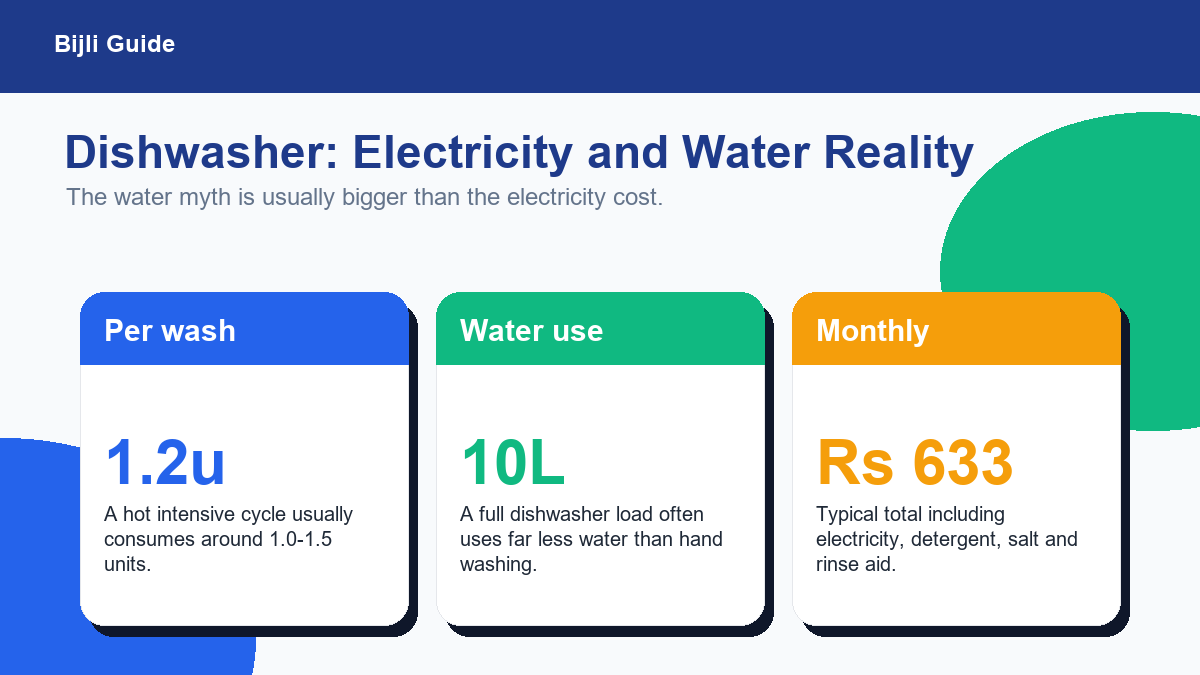
- Intensive Wash (70°C): ~1.2 to 1.5 Units per cycle.
- Eco Wash (50°C): ~0.8 to 1.0 Units per cycle.
If you run one Intensive load every night, that is 1.2 units × 30 days = 36 Units per month.
If your state electricity rate is ₹8 per unit, the electricity cost is just ₹288 per month.
The Water Savings Reality
A dishwasher recycles water inside the tub. A full intensive cycle uses only 9 to 11 liters of water. Washing that same massive pile of 80+ utensils by hand under a running tap easily consumes 40 to 60 liters of water.
Total Monthly Running Cost Breakdown
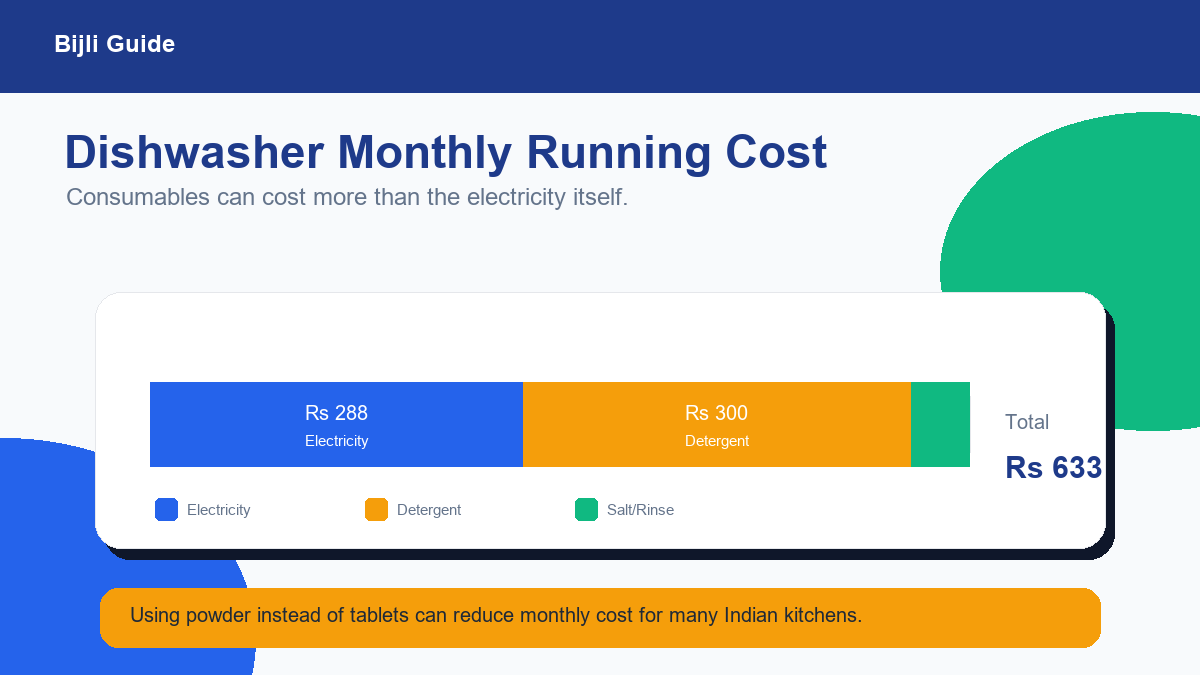
To calculate the true cost, we must include the consumables: Dishwasher Detergent (tablets or powder), Rinse Aid, and Water Softening Salt.
| Expense Category | Daily Cost (1 Wash) | Monthly Cost (30 Washes) |
|---|---|---|
| Electricity (at ₹8/unit) | ₹ 9.60 | ₹ 288.00 |
| Detergent Tablet/Powder | ₹ 10.00 | ₹ 300.00 |
| Rinse Aid & Salt (Prorated) | ₹ 1.50 | ₹ 45.00 |
| Total Running Cost | ₹ 21.10 per day | ₹ 633 per month |
Is ₹600 a month worth it?
In most Indian cities, hiring a domestic worker (maid) specifically for washing utensils costs between ₹800 to ₹1,500 per month.
Not only is the dishwasher cheaper to run per month than hiring help, but it also washes dishes at 70°C, providing a level of hygiene and sanitization that hand-washing simply cannot achieve.
Frequently Asked Questions
How many units of electricity does a dishwasher use per wash?
A standard 13 or 14-place setting dishwasher consumes about 0.9 to 1.2 units (kWh) per full intensive wash cycle, because it heats the water internally to 70°C.
Does a dishwasher waste a lot of water?
No, this is a common myth. A modern dishwasher uses only 9 to 11 liters of water for a full load. Washing the same amount of dishes by hand under a running tap consumes roughly 40 to 60 liters of water.
What is the total monthly running cost of a dishwasher in India?
Including electricity (₹8/unit), water, dishwasher salt, rinse aid, and detergent tablets, running a dishwasher once a day costs approximately ₹500 to ₹700 per month.